Hudson Dodd
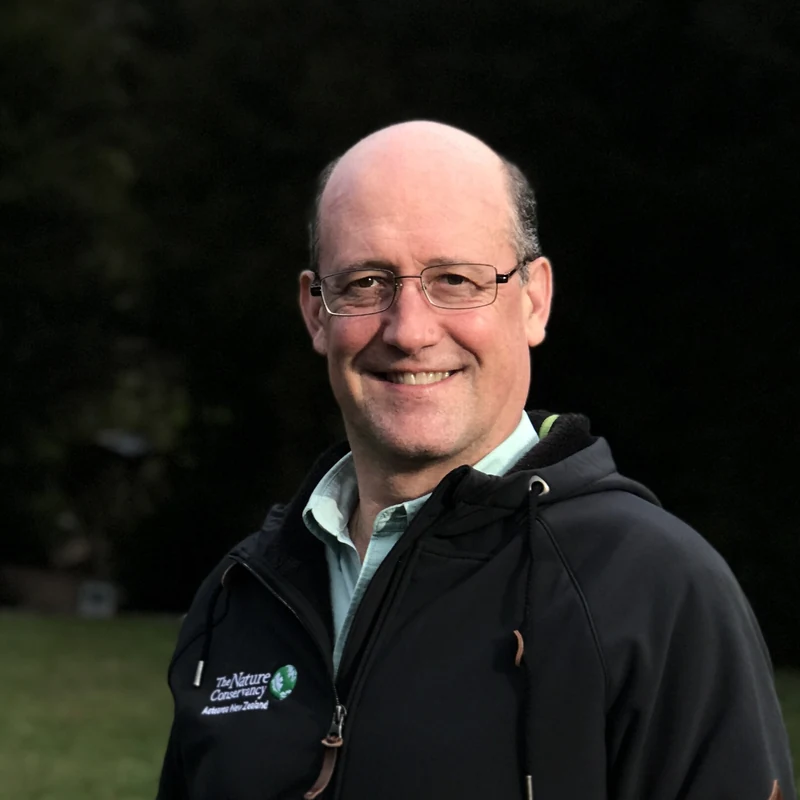
A leader in environmental conservation, Hudson Dodd was the first general manager of Nelson's Brook Waimārama Sanctuary, leading that community initiative through development to deliver the largest predator-free site on the South Island for native species conservation. Now with The Nature Conservancy, he manages the Restoring Lowlands project on behalf of the Kotahitanga mō te Taiao Alliance, working with iwi, local and central government, landowners and community groups to scale up restoration across Te Tauihu and Kawatiri.
Scaling up native restoration for nature and community resilience
The lowland ecosystems of Te Tauihu are among the country's most depleted and fragmented landscapes, yet they present one of the greatest opportunities for large-scale ecological recovery, climate resilience, integrated land management and community-led conservation. The KMTT Restoring Lowlands project is exploring opportunities to scale up lowland reforestation and restoration. Working within the KMTT Alliance’s collaborative framework, this ambitious initiative is using spatial planning tools to identify priority areas for native reforestation, surveying landowner preferences to develop incentives that support catchment-scale restoration plans, investigating carbon markets and other sustainable financing mechanisms to support restoration, and trialling restoration methods such as assisted natural regeneration and transition forestry to pursue the KMTT partners’ aspirations. The project has launched a major feasibility study to investigate the most affordable and effective ways of restoring native habitats across the fragmented lowlands of the Motueka, Moutere and Riuwaka river catchments in Te Tai-o-Aorere (Tasman District). Reestablishing native cover over large areas could accelerate New Zealand’s climate response, preserve globally significant biodiversity, help iwi and customary landowners restore the mana of the whenua, and support healthy, thriving communities.
A central objective is to identify low-cost pathways for restoring native vegetation across lowland catchments while maximising ecological, social, and cultural outcomes.
Through sediment modelling, ecological monitoring, and restoration trials, the project will evaluate which interventions can optimise environmental and economic returns, with the aim of developing a restoration model that could be used across Aotearoa, focusing on collaboration across whole river catchments for maximum benefit.
Kai Anamata mō Aotearoa
10–12 November 2026 · Motueka Memorial Hall